Overview
Searches for a Lava Hot Springs resort in Idaho usually assume one property with a front desk. There is no such thing. Lava Hot Springs is an incorporated town of a few hundred residents on the Portneuf River in Bannock County, and its main attractions are public pools owned by the State of Idaho. Lodging is a separate matter, supplied by independent inns, motels and vacation rentals.
The distinction shapes the whole trip. Pool admission is bought from a state agency, the Lava Hot Springs Foundation. A room is bought from a private business that has no connection to it. Nothing is bundled unless a particular inn chooses to offer something. Visitors who understand this plan well; visitors who expect resort-style packaging are often confused on arrival.
What the town offers in exchange is range. A couple can soak in hot mineral water on a snowy January night, and a family can spend a July day on water slides and diving platforms, in the same small place and within walking distance.
The Hot Pools
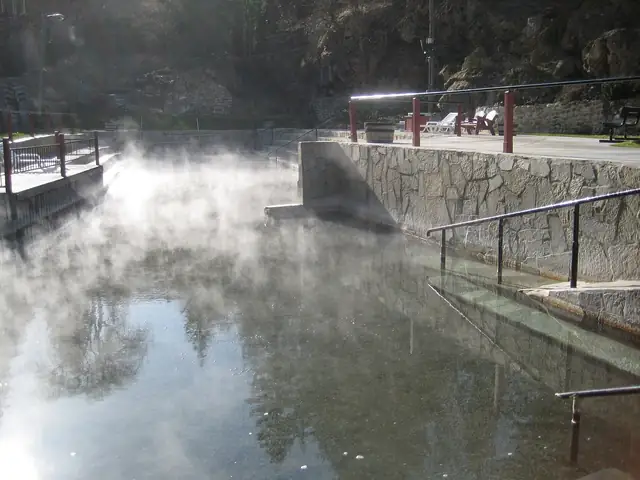
The state-run hot pools sit at the east end of town. The Foundation describes five outdoor pools at five different temperatures, ranging from about 102 to 112 degrees Fahrenheit. Some have pebble bottoms and some have jets. The pools are open year-round, with long daily hours that extend later on Friday and Saturday nights in winter.
Two features of the water set these pools apart from many hot springs:
- Flow. About 2.5 million gallons of natural spring water pass through the pools each day before draining to the Portneuf River. The water is constantly replaced rather than recirculated.
- No sulfur smell. The Foundation describes the water as odor-free, with no sulfur and no added chlorine. People who avoid hot springs because of the rotten-egg smell of hydrogen sulfide will not meet it here.
The water is mineral water in the plain sense: it carries dissolved bicarbonate, sodium, calcium and other minerals picked up underground. Changing rooms have lockers and heated floors, which matters more than it sounds in winter.
Expect a public facility, not a spa. The pools are large, shared and popular, and on holiday weekends they are crowded. The state's own planning documents also describe the upper hot pool as aging and slated for replacement, so parts of the complex may be under construction in coming seasons.
The Olympic Swimming Complex and Indoor Pool
At the west end of town the Foundation operates a second facility that is about play rather than soaking. The outdoor Olympic pool is 50 meters long with eight lanes, holds close to a million gallons, and is kept warm, though far cooler than the hot pools. Its deep end serves a diving tower with platforms at 5, 7 and 10 meters, flanked by springboards. Water slides, including steep speed slides and enclosed curly tube slides, run alongside.
The outdoor pool is a summer operation, running from the end of May to Labor Day. The Foundation has posted a 2027 season of late May through early September. Travelers who arrive in fall, winter or spring expecting slides will find them closed.
The Indoor Aquatic Center on the same site stays open most of the year with limited off-season hours. It has a 25-yard lap pool with a climbing wall and a low diving board, plus the Portneuf Kiddie Cove, a shallow warm pool reserved for children 11 and under. Off-season hours are short and the indoor pool is closed some weekdays, and it shuts for maintenance periods in fall, so check before promising children a swim.
Rules worth knowing
- Slides have height minimums, and riders go one at a time.
- The diving platforms require a signed waiver and a minimum age of seven; a parent or guardian signs for anyone under 18.
- Alcohol, glass and cooking are prohibited at the swimming complex, and intoxicated patrons are removed without refund.
- Outside food and coolers are allowed on the grounds, which is unusual for a water park and saves families real money.
Who Owns What
The hot springs were used for generations by the Shoshone and Bannock people, and the land was once part of the original Fort Hall reservation. An agreement in the late 1800s put the springs under federal control, and a 1902 act granted the land to the State of Idaho to be held for public use. Control later passed to the Lava Hot Springs Foundation, a state agency within the Idaho Department of Parks and Recreation, governed by a board appointed by the governor. Members of the Shoshone-Bannock Tribes and the Northwestern Band of the Shoshone Nation are admitted free with tribal identification.
The Foundation is self-supporting, meaning admissions pay for operations and improvements. That is why this is a ticketed public facility rather than a free state park, and also why prices are set to cover costs rather than to maximize profit.
Everything else in town is private: the inns, the restaurants and the tube rental shops along the river.
Lodging and Where to Stay
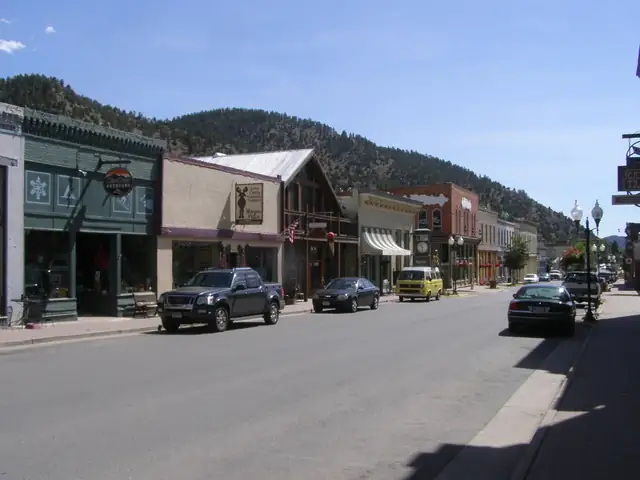
The state runs no hotel. Lodging in Lava Hot Springs consists of small independent inns, motels, cabins, campgrounds, RV parks and vacation rentals, most within a short walk of one pool complex or the other.
Some private inns have their own mineral soaking tubs or pools fed by hot water on their property, among them Riverside Hot Springs Inn and Lava Hot Springs Inn. For travelers who want to soak in privacy, or late at night, such an inn can replace the public pools entirely. For everyone else, an ordinary room near Main Street is enough.
Common mistakes: assuming a room includes pool admission, assuming a walk-in room will be available on a summer weekend, and booking at the far end of town from the facility the group cares about most. Summer weekends and holiday periods fill the town; midweek and the shoulder months are quieter and generally cheaper.
Getting There
Lava Hot Springs is in southeast Idaho on U.S. Route 30, a short drive east of Interstate 15 and southeast of Pocatello, the nearest city with full services. It is a practical stop between Salt Lake City and Idaho Falls, Island Park or Teton Valley, and a common weekend trip from northern Utah.
The town sits at roughly 5,000 feet. Winter roads are usually open but can be snowy, and the drive from the interstate crosses open country where wind and drifting matter. No pass or shuttle is needed in town; the two pool complexes are at opposite ends of a small, walkable main street.
When to Go
The answer depends on which Lava Hot Springs the traveler wants.
- Summer is for families. The outdoor pool, slides and platforms are open, and floating the Portneuf River through town on inner tubes is the other signature activity. It is also the most crowded and most expensive season.
- Winter is for soakers. Hot water under falling snow is the classic experience, and a ski day at Pebble Creek near Pocatello can end with an evening here.
- Spring and fall are quiet. The hot pools are open, the slides are not, and rooms are easier to find.
The hot pools do close on a few holidays; the Foundation's 2026 calendar shows them closed on Thanksgiving Eve and Thanksgiving Day. Hours for every facility are posted on the Lava Hot Springs Foundation hours calendar.
Who It Suits and Who It Does Not
Lava Hot Springs suits families who want an affordable water-focused trip, road travelers breaking up the Interstate 15 corridor, and soakers who dislike sulfur odor. It suits groups with mixed interests, since the hot pools and the swimming complex serve different people at the same time.
It does not suit travelers looking for a secluded natural spring, a luxury spa hotel, or quiet on a July weekend. Those who want rustic cabins and forest should look at Burgdorf Hot Springs or Gold Fork Hot Springs near McCall. Those who want capped attendance and adults-only hours should look at The Springs near Idaho City.
Frequently asked questions
Is there a Lava Hot Springs resort in Idaho?
Not as a single property. Lava Hot Springs is a town where the State of Idaho owns the public hot pools and swimming complex, and private inns and motels provide the lodging.
Who runs the hot pools at Lava Hot Springs, Idaho?
The Lava Hot Springs Foundation, a self-supporting State of Idaho agency within the Department of Parks and Recreation. The land was granted to the state in 1902 for public use.
How hot are the pools, and do they smell of sulfur?
The five outdoor hot pools range from about 102 to 112 degrees Fahrenheit. The Foundation describes the water as odor-free, with no sulfur and no chlorine.
Are the Lava Hot Springs pools open in winter?
The hot pools are open year-round, apart from a few holiday closures. The outdoor Olympic pool and its slides operate only from late May to Labor Day, while the indoor pool keeps limited off-season hours.
Does a hotel stay include admission to the hot pools?
Not automatically. The pools and the lodging are run by different entities, so admission is bought separately unless an individual inn states otherwise; some inns have their own private mineral tubs.
Can you bring food or alcohol to the swimming complex?
Outside food and coolers are allowed on the grounds of the Olympic Swimming Complex, but alcohol, glass and cooking are prohibited. See the Foundation's swimming complex page for the current rules.
Sources
- Lava Hot Springs Foundation — Hours calendar
- Lava Hot Springs Foundation — Swimming Pools and Waterpark
- Lava Hot Springs Foundation — Pools brochure
- Lava Hot Springs Foundation — Area History
- State of Idaho DFM — Lava Hot Springs Foundation strategic plan
- Wikipedia — Lava Hot Springs, Idaho
- Wikipedia — Lava Hot Springs (thermal mineral springs)