Four Kinds of Cabin Stay in Idaho
Cabin rentals in Idaho fall into four groups: cabins at private resorts, cabins and yurts in Idaho state parks, U.S. Forest Service cabins and fire lookouts reserved through Recreation.gov, and privately owned vacation rentals. They differ far more in what is supplied than in how they look, so the useful first question is not where the cabin is but who runs it.
A resort cabin on Priest Lake comes with a stocked kitchen, linens and a restaurant down the path. A Forest Service lookout comes with a bed frame, a wood stove and a view, and you carry in your own water. Both are advertised as cabins. The table sets out the differences; the sections below give examples and the booking patterns for each.
| Type | Who runs it | Usually supplied | How far ahead it books | Typical season |
|---|---|---|---|---|
| Resort cabin | Private resort or lodge | Beds made, kitchen in most, resort services | Set by each resort; summer weeks go earliest | Year-round at some, summer only at others |
| State park cabin or yurt | Idaho Department of Parks and Recreation | Beds, heat and power; a full kitchen and linens only in deluxe cabins | Up to nine months | Many year-round; some summer only |
| Forest Service cabin or lookout | U.S. Forest Service, through Recreation.gov | Shelter, beds, usually a stove; often no water or power | Generally up to six months | Mostly summer and early fall |
| Private vacation rental | Individual owner or manager | A furnished house; varies by listing | Set by the owner | Year-round where roads are plowed |
Two Terms to Know: Housekeeping Cabin and Dry Cabin
A housekeeping cabin is a cabin with its own kitchen, where guests cook their own meals and keep the place tidy themselves instead of receiving daily maid service. It is an old lodging term, still used at lake resorts in the Northwest. The cabins at the Priest Lake resorts work this way: kitchens are equipped, bed linens and bath towels are supplied, and guests bring groceries and beach towels. The term tells you to plan meals, not to expect hotel service.
A dry cabin is a cabin without running water. There is no sink tap, no shower and no flush toilet; water is carried in or drawn from a nearby spigot, and the toilet is an outhouse or a vault toilet (a sealed pit toilet of the kind found at trailheads). Many dry cabins also lack electricity. The cabins at Burgdorf Hot Springs and most Forest Service rentals are dry cabins. Travelers who read "rustic" as a style of decoration are the ones most often surprised.
Resort Cabins
Resort cabins are the easiest kind to use and the hardest to get in peak season. Three Idaho examples show the range.
Priest Lake
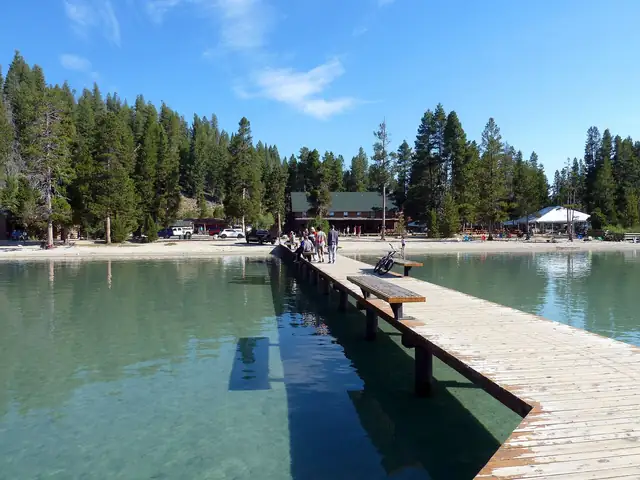
The cabins on Priest Lake are the classic Idaho lake stay. Elkins Resort has 30 cedar cabins of two to six bedrooms on Reeder Bay, with equipped kitchens, linens, propane grills and, in fireplace cabins, a daily supply of wood. Hill's Resort on Luby Bay has lakefront and forest-view cabins with kitchens, along with condominiums. Both operate through the year. Both rent by the week in the heart of summer, roughly late June to late August, and accept shorter stays with two-night or longer minimums in other seasons. Priest Lake State Park, on the east shore, adds six simpler cabins with heat and electricity and a shared restroom building. Anyone searching for cabins on Priest Lake for a three-night July stay will find the state park and private rentals more flexible than the resorts.
Redfish Lake Lodge
Redfish Lake Lodge, south of Stanley, rents standalone and duplex cabins sleeping four to eight, alongside lodge rooms and suites. It is a summer operation, open roughly from late May into October, and it had closed for the 2026 season at the time of writing. Rooms have no televisions. One point catches visitors out: according to the lodge's policies, only two units have full kitchens, cooking is permitted only in units with kitchen facilities, and outdoor cooking is not allowed. For most cabins here, plan on eating at the lodge's restaurants. Pets are not permitted.
Burgdorf Hot Springs
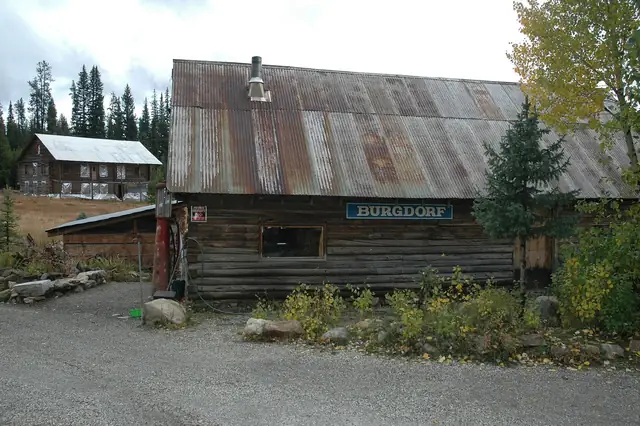
Burgdorf, about 32 miles north of McCall, is the opposite end of the scale. Its historic log cabins have no running water and no electricity. Heat comes from a wood stove, firewood is provided, and the toilets are outhouses. Guests bring bedding, cookware, food, water containers and lights. In return, cabin guests have access to the hot pools at any hour. Burgdorf describes the experience as camping inside a cabin, and that is accurate. Stays require a reservation, normally of two nights or more.
Other resorts with cabins include Bottle Bay Resort on Lake Pend Oreille, Sawtelle Mountain Resort in Island Park and Teton Valley Resort in Victor, where cabins sit beside RV sites and share a pool.
State Park Cabins and Yurts
The Idaho Department of Parks and Recreation rents three kinds of structure, and the names matter.
- Camper cabins are one room, sleep up to five on bunk beds and futons, and have power, heat and air conditioning. Cooking is done outside on a fire pit grill. Guests bring bedding, and water and restrooms are in a nearby building.
- Deluxe cabins are small houses: a full kitchen with cookware and dishes, bathrooms, and beds supplied with sheets, blankets and towels.
- Yurts are round, canvas-walled shelters on a wooden platform, about 20 feet across, usually with bunks and a wood stove. The state sorts them into backcountry, deluxe and premium types.
Parks confirmed on the state's own pages as renting cabins include Ponderosa State Park in McCall, which has 17 deluxe cabins and one summer-only camper cabin; Priest Lake, with six cabins at Indian Creek; Farragut, near Athol, with 10 camping cabins; Heyburn, with two cabins and two cottages available all year; and Henrys Lake, near Island Park, with three. For yurts, the department points to Castle Rocks, Harriman, Lake Cascade and Winchester Lake. Other parks have rental structures as well, and the reservation system is the authoritative list.
The state also runs the Idaho City Backcountry Yurts, seven yurts on Boise National Forest land northeast of Boise. Each sleeps six and has a wood stove with wood supplied, a propane cook stove, solar lights and a pit toilet. In winter there is no road access: guests ski or snowshoe in, typically two to three miles, and melt snow for water.
Rules vary by park. Ponderosa requires a two-night minimum in its deluxe cabins, bars pets from cabins and expects renters to clean before leaving. Dogs are not allowed at Harriman at all. State park rentals are reserved through the department's system, described on its Idaho Department of Parks and Recreation site.
Forest Service Cabins and Lookouts
The U.S. Forest Service rents out former ranger stations, guard cabins and fire lookouts on Idaho's national forests. Reservations are made on Recreation.gov, the federal booking site, not through the local ranger district. The agency's Northern Region, which covers the forests of northern Idaho, describes its rentals as old homesteads, historic ranger stations, lookouts built by the Civilian Conservation Corps, and some newer cabins.
These are the cheapest roofs in the state and the most demanding. Deadwood Lookout in the Boise National Forest is a fair example. It is a 1934 lookout at 8,200 feet, generally available from June through October. The Forest Service supplies two beds with mattresses, a wood stove, a table and a vault toilet outside. It does not supply water, electricity, firewood, bedding or cookware. The last three miles of road are narrow, steep dirt, and a high-clearance vehicle is recommended. Guests pack out their garbage and clean the cabin before leaving.
Not every Forest Service rental is that spare. A few road-accessible cabins have electricity and plumbing, and each listing spells out what is there. Read it line by line. The common mistakes are assuming drinking water, assuming a passenger car can reach the door, and assuming the opening date is fixed. Snow decides when high roads open, and a reservation in June at 8,000 feet can be canceled by a late snowpack.
Who these suit: self-sufficient travelers who already own camping gear. Who they do not suit: anyone who needs a shower, a short walk to a toilet at night, or a dependable phone signal.
Private Vacation Rentals
Privately owned cabins and houses, listed on the large rental platforms or through local property managers, make up most of the supply in McCall, Island Park, Teton Valley, Sandpoint and around Priest Lake. They are the practical choice for groups too large for a resort cabin and for stays that do not fit a resort's weekly calendar.
What a private rental includes depends entirely on the owner. Check five things before committing: whether linens and towels are supplied, what the cleaning charge and minimum stay are, whether the road and driveway are plowed in winter, whether the property has lake or dock access or only a view, and whether local rules limit occupancy or parking. A cabin described as "near" a lake or ski area may be a half-hour drive from it.
One further caution applies near resorts. Amenities sold with resort lodging do not always transfer to a privately booked unit in the same building. At Silver Mountain Resort, for example, waterpark admission comes with stays booked through the resort and not with third-party rental bookings.
Booking Windows and Seasonal Access
Each type of cabin opens for booking on a different schedule, and knowing the structure matters more than knowing a single date.
- State parks: reservations open up to nine months before arrival, and stays are capped at 14 nights in a 30-day period.
- Forest Service rentals: generally a rolling window of up to six months on Recreation.gov. Confirm the window on the individual listing.
- Resorts: each sets its own calendar. Summer weeks at the lake resorts are the first to go, and several take reservations by phone. Burgdorf opens bookings 90 days ahead.
- Private rentals: set by the owner, often a year out, with longer minimum stays in July and August and over holidays.
Cost follows the same pattern everywhere. Peak summer and holiday dates are highest, midweek and shoulder-season nights are lower, state parks add a surcharge for non-residents on some rentals, and cleaning or reservation fees are added on top of the nightly rate.
Access is the other half of the calendar. Lake resorts at low elevation, such as those on Priest Lake, stay open in winter. Redfish Lake Lodge closes from fall to late spring. Burgdorf can be reached by car from about June to November and only by snowmobile from about December to April, a ride of roughly 23 miles from the end of the plowed road, with short closures between seasons. Backcountry yurts reverse the usual logic: winter is their main season, and the approach is on skis.
Which Type to Choose
- For a first family lake week: a resort cabin on Priest Lake, where the kitchen is stocked and help is nearby.
- For a short stay on a budget: a state park camper cabin, treated as camping with a roof and a heater.
- For a comfortable state park stay: a deluxe cabin at Ponderosa State Park, which functions like a small rental house.
- For solitude and a view: a Forest Service lookout, for those equipped to be self-sufficient.
- For a large group or an odd-length stay: a private vacation rental, after reading the listing closely.
- For hot springs and no screens: Burgdorf, provided a dry cabin and an outhouse are acceptable.
The most common mistake is booking on the photograph. Two log cabins that look alike can differ by a kitchen, a bathroom, a plowed road and three months of season. Read what is supplied, check how the cabin is reached in the month you are going, and then decide.
Frequently asked questions
Where can you find cabin rentals in Idaho?
In four places: private resorts such as those on Priest Lake, Idaho state parks, U.S. Forest Service cabins and lookouts on Recreation.gov, and privately owned vacation rentals. McCall, Priest Lake, Island Park, Stanley and Sandpoint have the largest concentrations.
Which Idaho state parks have cabins or yurts?
Ponderosa, Priest Lake, Farragut, Heyburn and Henrys Lake state parks all rent cabins, and Castle Rocks, Harriman, Lake Cascade and Winchester Lake are the parks the state highlights for yurts. Other parks have rental structures too, so check the state reservation system for the full list.
What is a housekeeping cabin?
It is a cabin with its own kitchen where guests cook for themselves and there is no daily maid service. Linens are normally supplied; groceries are not.
What is a dry cabin?
A dry cabin has no running water. Guests carry water in and use an outhouse or vault toilet, as at Burgdorf Hot Springs and most Forest Service rental cabins.
How far ahead should you book cabins on Priest Lake, Idaho?
As early as the resort allows for July and August, when Elkins Resort and Hill's Resort rent by the week. Priest Lake State Park cabins can be reserved up to nine months ahead, and fall, winter and spring stays at the resorts are much easier to get.
Can you rent a fire lookout in Idaho?
Yes. The Forest Service rents several former lookouts, such as Deadwood Lookout in the Boise National Forest, through Recreation.gov. Most have no water or electricity and are open only in summer and early fall.
Sources
- Idaho Department of Parks and Recreation — Camping (cabin and yurt types)
- Idaho Department of Parks and Recreation — Yurts
- Idaho Department of Parks and Recreation — Ponderosa State Park
- U.S. Forest Service — Deadwood Lookout Rental Cabin
- U.S. Forest Service Northern Region — Cabins
- Elkins Resort — Cabin Policies
- Redfish Lake Lodge — Policies
- Burgdorf Hot Springs — FAQ