Overview
Idaho snowmobiling is organized by county, not by resort. Counties, a few cities and local clubs run the grooming programs, the Idaho Department of Parks and Recreation (IDPR) registers the machines and distributes the money, and most of the riding takes place on national forest and state land. For a visitor, that structure produces one practical decision: choose a region, then choose lodging close to a plowed trailhead.
Five regions cover what most travelers want. Island Park has the largest connected groomed network and the easiest terrain for trail riders. McCall and Stanley offer higher country and more off-trail riding. Priest Lake pairs a long trail system with lakeside resorts in the far north. The Sun Valley area has the least groomed mileage of the five, and it suits a skier adding one day on a sled more than a rider planning a full week.
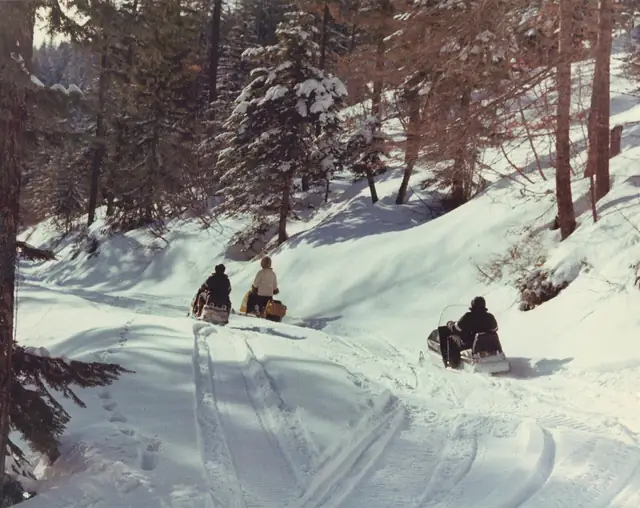
Two terms appear throughout. A groomed trail is a snow-covered road or route that a tracked machine has packed and smoothed, which makes it fast, predictable and suitable for beginners. Off-trail or backcountry riding (often called boondocking) means leaving the groomed surface for open meadows, timber and mountain slopes, where skill, a suitable sled and avalanche training matter far more.
The Main Regions Compared
Published mileage figures vary by source because some count only trails groomed inside Idaho and others count everything a rider can reach across a state line. Treat the numbers below as a guide to scale, not a precise measurement.
| Region | Groomed trail (as published) | Prime season | Best suited to |
|---|---|---|---|
| Island Park | More than 500 miles per IDPR, with links to West Yellowstone and Wyoming; Visit Idaho cites more than 950 | December to March | Trail riders, families, first-timers |
| McCall and Valley County | About 500 miles | December to April | Mixed groups, off-trail riders, skiers |
| Stanley and the Sawtooth Valley | About 185 to 200 miles | November to April | Scenery, solitude, experienced parties |
| Priest Lake | More than 400 miles | December to March | Resort-based trips in North Idaho |
| Sun Valley and Blaine County | 120 miles groomed by the county | December to April | A day of riding during a ski trip |
Other systems deserve a mention even though they sit outside the main resort areas. The Silver Valley around Wallace anchors a network of roughly 1,000 miles that reaches into Montana, and Bear Lake County in the southeast corner grooms about 350 miles.
Island Park
Island Park snowmobiling is the benchmark for the state. The community sits on a high volcanic plateau along U.S. 20, at elevations IDPR lists as 5,000 to 9,000 feet, a short drive from West Yellowstone, Montana. IDPR credits the area with more than 500 miles of groomed trail plus roughly 800 more that connect toward West Yellowstone and Wyoming; Visit Idaho's figure of more than 950 miles reflects that wider connected network.
The terrain explains the appeal. Much of the plateau is flat or gently rolling lodgepole forest, so groomed routes to Mesa Falls, Big Springs and Two Top Mountain are within reach of a novice on a rented sled. A 45 mph speed limit is enforced on groomed trails. Steeper riding lies at the edges, in the Centennial Mountains and the Lionhead area along the Continental Divide, and that is where the avalanche hazard is concentrated.
One common mistake is assuming a sled can simply continue into Yellowstone National Park. Park roads are open only to commercially guided snowmobile and snowcoach trips or to holders of a limited, lottery-issued permit for non-commercially guided groups, and machines must meet the park's emissions and noise standard. Riders who want Old Faithful should plan a guided day from West Yellowstone.
Sawtelle Mountain Resort is among the Island Park properties that market winter stays with trailer parking and nearby trail access. Confirm winter operations and any rental arrangements directly before committing.
McCall and Stanley
McCall and Valley County
Valley County reports nearly 500 miles of groomed trail, reached from parking lots near McCall, Donnelly and Cascade along Idaho 55. The best-known route follows Warren Wagon Road north from McCall toward Burgdorf Hot Springs, the Secesh area and the old mining town of Warren. West of town, trails lead to Goose Lake, Granite Lake and Brundage Reservoir. Farther south, Wellington Snow Park at Smiths Ferry serves about 400 miles of trail, some 250 of them groomed.
McCall suits a mixed group better than any other region. Brundage Mountain runs guided snowmobile trips and rentals from the ski area, so part of a party can ski while the rest ride, and the town has enough lodging and restaurants to absorb a bad-weather day. Shore Lodge and the town's hotels put visitors within a short drive of the main trailheads. Valley County requires a parking permit at its snowmobile lots; a current Idaho snowmobile sticker counts as the day-use permit.
Stanley and the Sawtooth Valley
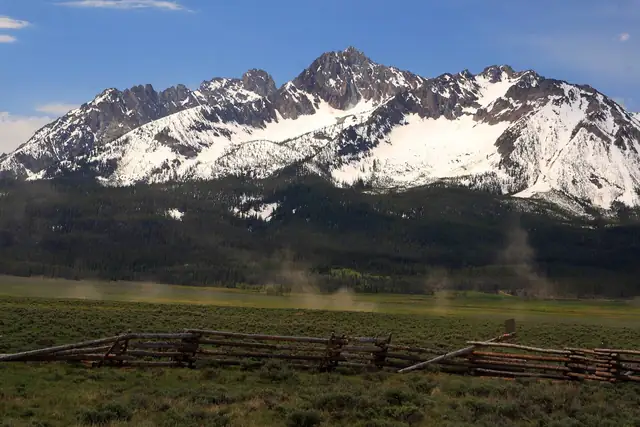
Stanley is smaller, colder and quieter. The city grooms close to 200 miles of trail; the local chamber puts the figure at more than 185. Groomed routes run to Redfish Lake and Stanley Lake, south about 30 miles to Smiley Creek, and west through Bear Valley, where a warming hut stands at Bruce Meadows, toward Lowman. The Sawtooth Range fills the view for much of the day.
Stanley does not suit travelers who want choice. Many businesses close in winter, Redfish Lake Lodge is shut for the season, and services thin out quickly beyond town. Mountain Village Resort is the usual lodging base in Stanley, and Smiley Creek Lodge at the south end of the valley offers lodging, fuel, rentals and guided rides. The Sawtooth Wilderness itself is closed to motorized use, so riding stays on the valley floor and in the non-wilderness ranges around it.
Priest Lake and the Sun Valley Area
Priest Lake
Priest Lake has more than 400 miles of groomed trail on state and federal forest roads, at elevations from about 2,500 feet at the lakeshore to more than 6,500 feet in the Selkirk Mountains. Trails circle both the main lake and Upper Priest Lake. North of Nordman, the Granite Pass system alone accounts for four groomed trails and nearly 100 miles.
Its advantage is convenience. Several year-round resorts sit at or near trailheads, and local outfitters deliver rental sleds to lodging, so a visitor does not need a truck and trailer. Hill's Resort, Elkins Resort and the other Priest Lake properties vary in what they open in winter, so check each one's current season. The drawback is elevation: the lake basin is low by Idaho standards, and a warm spell can soften lower trails while the high country stays good.
Snowmobiling in Sun Valley
Snowmobiling in Sun Valley is limited close to town and extensive an hour away. Blaine County grooms 120 miles in two places: the Baker Creek area about 10 miles north of Ketchum, and the Wood River Recreation Area three miles west of Hailey. Off-trail riding is allowed only in designated zones, so check the Sawtooth National Forest winter travel map before leaving a groomed route.
For a full day, most riders drive north over Galena Summit to Smiley Creek and the Stanley system, or southwest to Fairfield, where Camas County grooms about 220 miles and Soldier Mountain is close by. Sun Valley is the right base for skiers who want one guided ride. It is the wrong base for a group whose whole trip is snowmobiling.
Registration Stickers and Trail Rules
Every snowmobile operated in Idaho, on public or private land, must display a current certificate of number, the registration sticker issued through IDPR. Key points:
- Annual cycle. Stickers run from November 1 through October 31. A two-year option is also sold.
- No nonresident exemption. Out-of-state riders must buy an Idaho nonresident sticker even if the sled is registered at home. There is no short-term or weekend version, which surprises visitors from states that honor each other's registrations.
- Rental sleds. Rental machines carry their own class of sticker, supplied by the outfitter.
- County designation. The buyer names the county where they ride, and most of the fee goes to that county's program for grooming, lot plowing, signs and safety classes. Naming the county you actually ride in is the most direct way to support its trails.
- Where to buy. Stickers are sold online through the state, at local vendors and at county motor vehicle offices. The emailed receipt serves as a temporary permit until the sticker arrives.
Parking is a separate matter. Some counties, Valley County among them, require a permit at plowed snowmobile lots. Details and current fees are on the IDPR snowmobiling page.
Avalanche Awareness
Groomed valley trails carry little avalanche risk. Off-trail riding on or beneath steep slopes is different, because a sled can reach dangerous terrain quickly. The daily forecast for the Island Park mountains was introduced after two avalanche deaths in the nearby Lionhead area in 2018. Riders who leave the trail should treat three steps as standard practice.
- Read the forecast. The Sawtooth Avalanche Center covers the Stanley and Sun Valley mountains. The Payette Avalanche Center covers the McCall area. The Gallatin National Forest Avalanche Center, based in Montana, issues daily forecasts for the mountains near Island Park, including the Centennial Range. North Idaho's Selkirks are covered by a Forest Service avalanche center for the Panhandle.
- Carry rescue gear. Each rider needs an avalanche transceiver (a beacon that transmits and receives a locating signal), a probe and a shovel, worn or carried on the body and not stored on the sled.
- Take a class. IDPR runs free avalanche awareness and companion rescue clinics each winter, aimed at motorized users, with schedules posted by region.
Visitors without training have a simple alternative: stay on groomed routes or hire a licensed guide. Idaho requires outfitters and guides to be licensed, and a guided day is the safest way to try mountain riding.
How to Choose
Match the region to the group, not to the mileage figure.
- First-time riders and families: Island Park, for flat groomed trails, many rental outfitters and obvious destinations.
- Groups that also ski: McCall, with Brundage Mountain and Tamarack Resort nearby and guided sled trips leaving from the ski area.
- Experienced riders seeking quiet: Stanley, accepting limited services and long drives.
- North Idaho and Spokane-area visitors: Priest Lake, for resort lodging beside the trails.
- Sun Valley skiers: a guided day at Baker Creek or Smiley Creek, not a dedicated trip.
Season matters as much as place. Midwinter, from January through early March, is the dependable window. Early and late season depend on elevation, and grooming stops when county budgets or snow run out, so check the local grooming report before traveling.
Frequently asked questions
Where is the best snowmobiling in Idaho?
Island Park is the usual answer for groomed trail riding, with more than 500 miles groomed locally and links to West Yellowstone. McCall and Stanley are stronger choices for mountain and off-trail riding.
Can you go snowmobiling in Sun Valley?
Yes, but not from the resort itself. Blaine County grooms 120 miles at Baker Creek north of Ketchum and at the Wood River Recreation Area near Hailey, and longer rides start over Galena Summit at Smiley Creek or near Fairfield.
Do out-of-state riders need an Idaho snowmobile sticker?
Yes. Idaho does not exempt nonresidents, so every visiting sled needs a current Idaho nonresident sticker, and there is no short-term version. Rental sleds come with their own.
How many miles of trails does Island Park have?
Idaho Parks and Recreation lists more than 500 miles of groomed trail in the Island Park area, plus about 800 more connecting to West Yellowstone and Wyoming. Visit Idaho cites more than 950 miles for the wider network.
Can I ride my snowmobile from Island Park into Yellowstone?
Not on your own. Yellowstone admits snowmobiles only on commercially guided trips or under a limited lottery permit for private groups, and machines must meet park standards; see the National Park Service snowmobiling rules.
When is snowmobile season in Idaho?
Prime season runs from December through March in most regions and into April around McCall, Stanley and the Sun Valley area. Grooming begins only once enough snow covers the roads, so early December is a gamble.
Sources
- Idaho Department of Parks and Recreation: Snowmobiling
- Idaho Department of Parks and Recreation: Idaho Snowmobile Program
- Visit Idaho: Top Snowmobiling Destinations in Idaho
- Valley County: Snowmobiling
- Stanley-Sawtooth Chamber: Guide to Snowmobiling in Stanley
- Visit Sun Valley: Snowmobiling
- National Park Service: Snowmobiling in Yellowstone
- Visit McCall: Snowmobile Like a Local